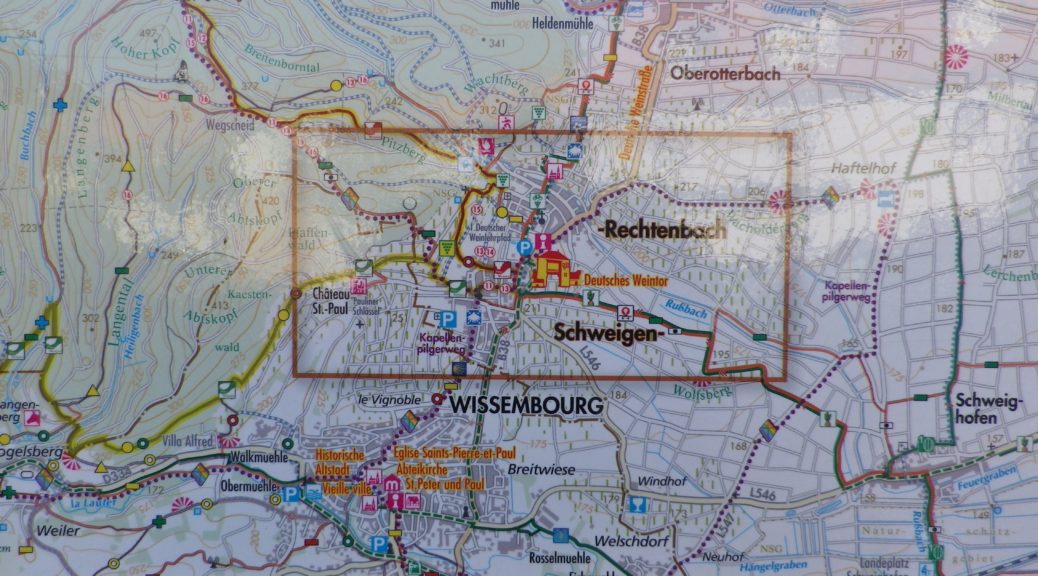
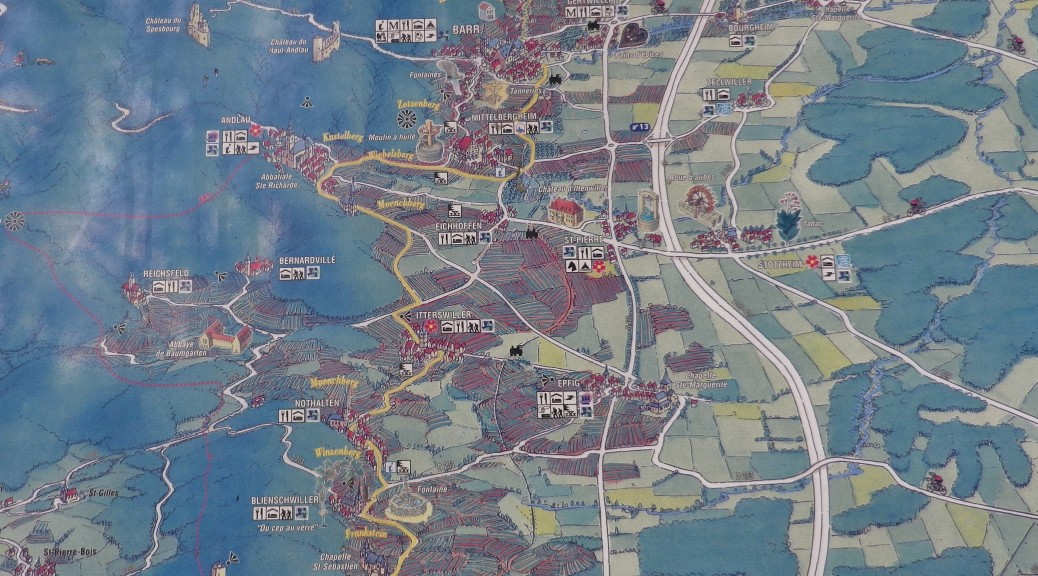
The vineyards above the German village of Schweigen-Rechtenbach and the French town of Wissembourg have a viticulture history and a wine-making passion in common. Grapes have been cultivated for centuries. The vineyards in this area once all belonged to the Merovingian abbey in Wissembourg. Over time, these have become named, and a circuit trail passes through or by them. They are, from south to north: the Kammerberg, the Raedling, the Strohlenberg and the St. Paul, in France, and the Sonnenberg, in Germany.
At a wine tasting with both red and white wines, organizers usually end the event with the red wine selection. In my most recent bike tour, I began in white wine territory, (albeit one that produces a decent Pinot Noir as well), and finished the trail in an Alsatian village known for its reds. In between, the trail wound through other compact villages with colorful visuals, people and history, and vineyards, lots of vineyards.
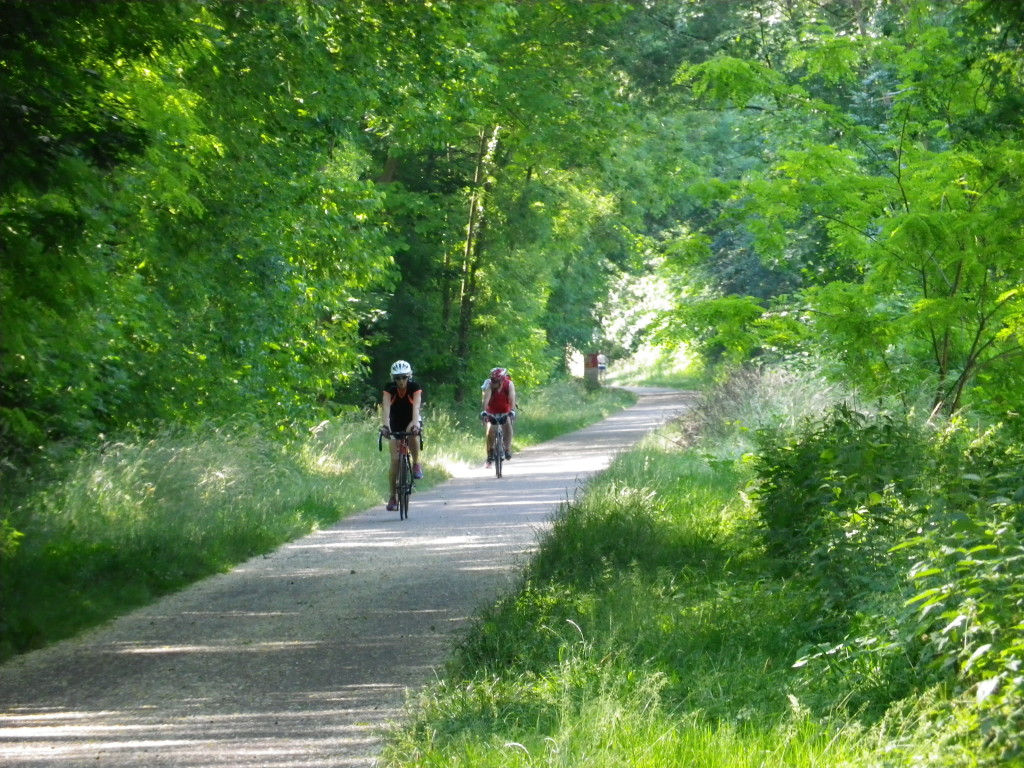
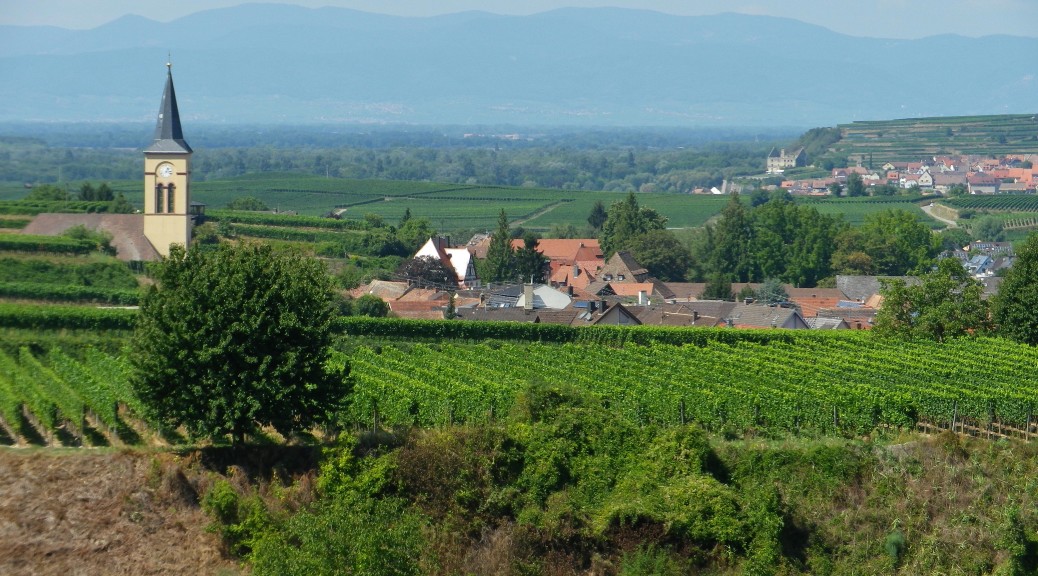
So it was with this trail: wonderful, diverse wines, interesting villages, and a bit of history, all in one beautiful day. From the outset in Marlenheim, the trail revealed its rural tendencies. The first ten kilometers or so were along a beautifully maintained bicycle-only trail, set amidst green fields, woods, and past the backs of villages. After Molsheim (home to the first Grand Cru along the trail) and Dorlisheim, another four and a half kilometers of peaceful trail resumes. Be it through fields or vineyards, there were plenty of sights and views to admire. Alsatian countryside is idyllic, the villages beyond charming, and the trail highlighted the opportunities to appreciate these.
Alsace wines are varietal wines (excepting the Edelzwickers), and of these, only one is a red wine. That wine is from the Pinot Noir varietal. Alsatian Pinot Noir wines are not generally well known. Alsatian Pinot Noir wines tend to be lighter, but very fruit-forward Pinot Noir wines. They are, of course, different from Burgundian Pinot Noir wines, from which tradition they derive. Early in the 12th century monks from Burgundy headed into Alsace, bringing vine plantings with them. When they arrived around Mont Sainte Odile (site of an early Merovingian foundation), they successfully transplanted their vines on the lower, sunny slopes.
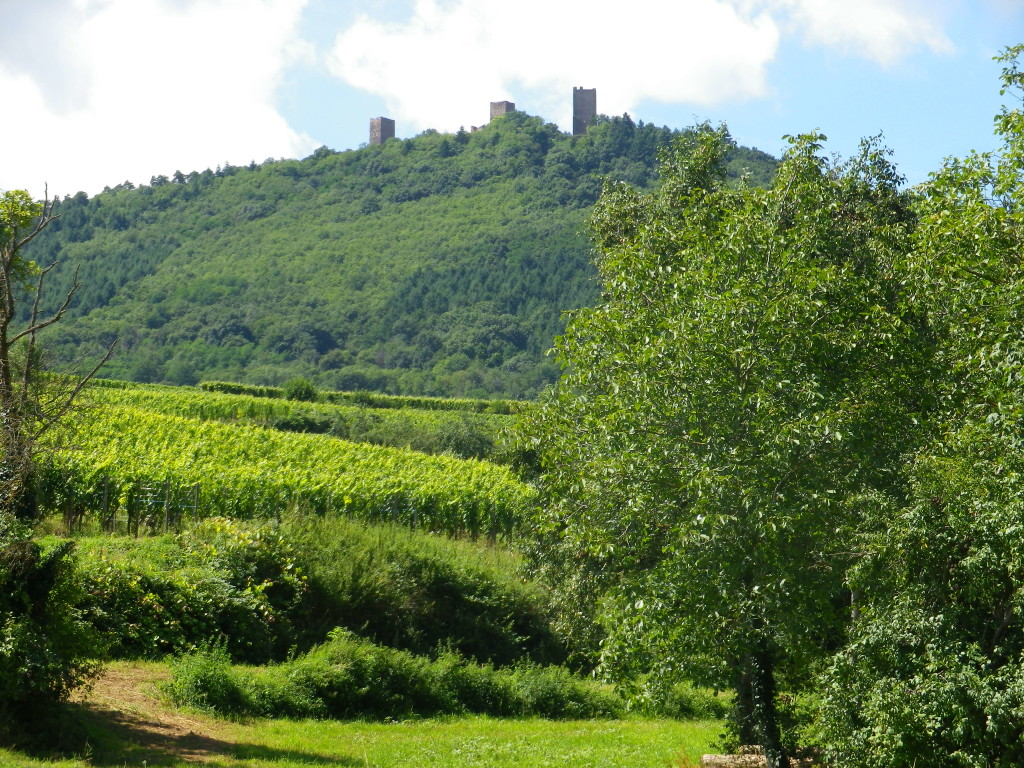
Vineyards and Castles: Two of my absolute favorite European travel experiences, and I experienced them both on this delightful circuit trail in southern Alsace!
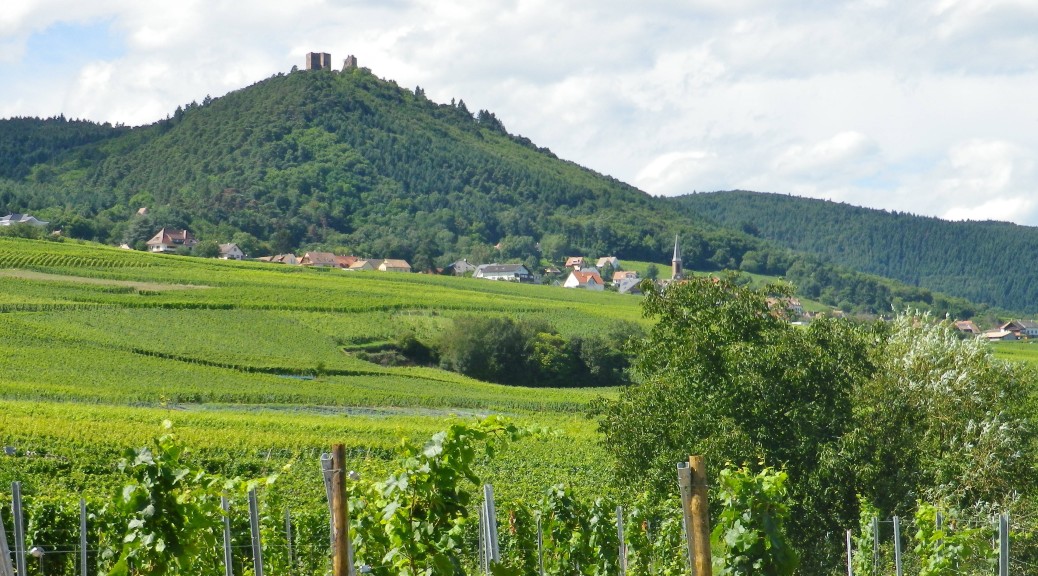
In France, it is more likely that you will find palaces and vineyards. But in Alsace, a famous wine region where for centuries French and German armies clashed, nobles built castles. Literally dozens remain to be seen today. Although most are in ruins, they powerfully evoke a sense of time and place for those visiting their often eerie haunts. This is especially true if you are willing to hike to some of the more remote ones, on distant hills, overlooking remote valleys, practically shrouded by vegetation.
Alsace’s Haut-Rhin (Upper Rhine) area’s interesting geological history resulted in some great terroirs. It was initially born of volcanic activity. Once spent, the volcanic mountains collapsed on themselves, and an ancient sea covered the area. Then two mountain chains arose (the Vosges in France, and the Black Forest range in Germany), and the ancient Rhine river poured through the resulting valley. As the river receded to its current banks, it exposed the slopes of the Vosges, on which the Alsatian vineyards currently lie. The soil here is incredibly complex, thanks to this geological history, and it results in minerally, and complex wines.
Trail Type: Mid-distance circuit; varied surface types (paved, grass, dirt, rock), with some steps to climb; fairly well-maintained trail; the route itself is usually clearly marked, except in a couple of places.
Length: Total: 10.5 kilometers/6.5 miles
Convenient to: Colmar, France
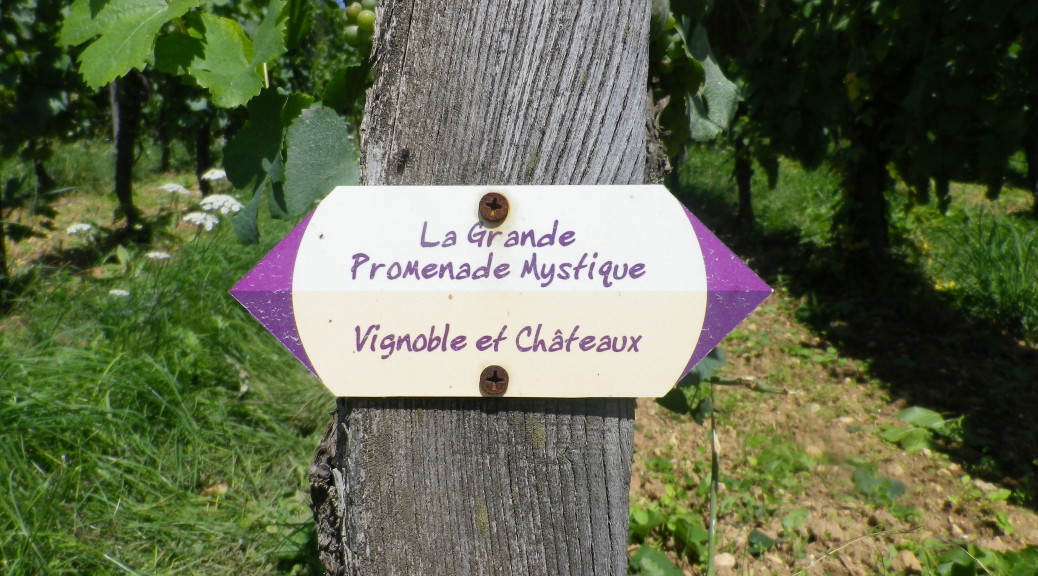
Marking: Trail name “Vignoble et Chateaux” in purple letters on white background. (Another trail name also appears on these signs when trails overlap.)



You must be logged in to post a comment.